Introduction: A New Era in Investing
When people talk about the transformation of stock trading in India, one name almost always comes up—Zerodha. It didn’t just enter the market; it reshaped it. In a space that was traditionally dominated by full-service brokers charging hefty commissions, Zerodha introduced a lean, tech-first approach that made trading more accessible and affordable.
Founded in 2010, Zerodha emerged at a time when retail participation in stock markets was relatively low. Investing felt complicated, expensive, and often intimidating for beginners. The company’s core idea was simple yet powerful: eliminate unnecessary costs and simplify the process so that anyone with an internet connection could participate in the markets.
What makes Zerodha particularly interesting is that it didn’t rely on flashy marketing campaigns or venture capital funding to grow. Instead, it focused on product quality, customer trust, and word-of-mouth. Today, it stands as one of India’s largest brokerage firms, with millions of users and a strong reputation for innovation and transparency.
Founders Behind Zerodha
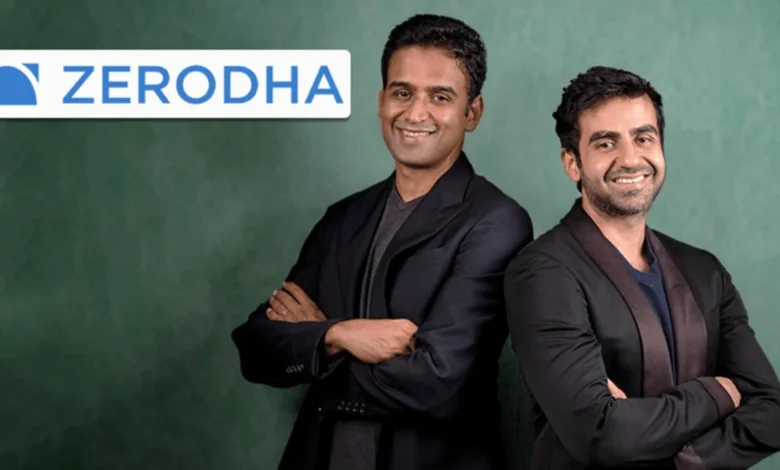
Every disruptive company has a story, and Zerodha’s story begins with its founders, Nithin Kamath and Nikhil Kamath. Unlike many startup founders who come from elite business schools, the Kamath brothers built their journey through hands-on experience in trading.
Nithin Kamath started trading at a young age and quickly realized the inefficiencies in the traditional brokerage system. High brokerage fees, lack of transparency, and outdated platforms made trading unnecessarily difficult. This firsthand frustration became the foundation for Zerodha’s creation.
Nikhil Kamath, a self-taught trader himself, complemented Nithin’s vision with sharp market insights and strategic thinking. Together, they built a company that not only challenged industry norms but also stayed profitable without external funding—something rare in the startup ecosystem. Their approach has often been described as disciplined, customer-focused, and refreshingly grounded.
The Business Model: Simplicity Wins
Zerodha’s business model is one of its strongest differentiators. While traditional brokers charged a percentage of trade value, introduced a flat-fee model. This meant traders paid a fixed fee per trade, regardless of the transaction size.
This simple shift had a massive impact. For active traders and investors dealing in large volumes, the cost savings were significant. It democratized trading by making it affordable for both small and large investors alike.
Another key aspect of Zerodha’s model is its focus on technology rather than physical branches. By operating as a digital-first platform, the company minimized overhead costs and passed those savings on to customers. It also ensured scalability, allowing to serve millions of users efficiently without compromising on performance.
Technology at the Core: Kite and Beyond
At the heart of Zerodha’s success lies its technology stack, particularly its flagship trading platform, Kite. Designed with a clean interface and powerful features, Kite caters to both beginners and experienced traders.
Kite offers real-time data, advanced charting tools, and a seamless user experience across devices. Unlike older platforms that felt cluttered and slow, Kite focuses on speed and simplicity. This design philosophy has made it one of the most محبوب trading platforms in India.
Beyond Kite, has built an entire ecosystem of products. Tools like Coin for mutual fund investments and Varsity for financial education show that the company is not just about trading—it’s about empowering users with knowledge and options. This ecosystem approach has helped Zerodha retain users and build long-term relationships.
Education and Financial Literacy
One of Zerodha’s most underrated contributions is its focus on education. Through its platform Varsity, the company offers free, high-quality educational content on trading, investing, and financial markets.
Varsity breaks down complex topics into easy-to-understand modules. Whether it’s technical analysis, fundamental analysis, or risk management, the content is designed for learners at all levels. This approach has helped thousands of people build confidence in managing their finances.
In a market where misinformation and speculation are common, Zerodha’s commitment to education stands out. It reflects the company’s long-term vision—not just to grow its user base, but to create informed investors who understand what they’re doing.
Impact on the Indian Stock Market
Zerodha didn’t just grow as a company; it changed the entire brokerage industry in India. Its success forced traditional brokers to rethink their pricing models and improve their technology.
The rise of discount broking, largely driven by Zerodha, led to increased competition and innovation. This ultimately benefited customers, who now have access to better services at lower costs.
Moreover, Zerodha played a significant role in increasing retail participation in the stock market. By making investing accessible and affordable, it encouraged a new generation of investors to explore financial markets. This shift has had a lasting impact on India’s economic landscape.
Challenges and Criticism
Despite its success, Zerodha is not without challenges. Like any technology-driven platform, it occasionally faces technical glitches, especially during periods of high market volatility. For active traders, even minor disruptions can be frustrating.
Another criticism is the lack of full-service offerings. While Zerodha excels as a discount broker, it doesn’t provide personalized advisory services like traditional brokers. This can be a limitation for investors who prefer guided decision-making.
However, Zerodha has consistently worked on improving its systems and addressing user concerns. Its transparent communication style and willingness to acknowledge issues have helped maintain customer trust.
Profitability Without Funding
One of the most remarkable aspects of Zerodha’s journey is its financial discipline. Unlike many startups that rely heavily on venture capital, has remained bootstrapped and profitable.
This independence has allowed the company to focus on long-term goals rather than short-term investor expectations. It also means that decisions are driven by customer needs rather than external pressures.
Being profitable from early on gave Zerodha a unique advantage. It could invest in technology, expand its offerings, and build a strong brand without compromising its core values. This approach has made it a case study in sustainable business growth.
The Future of Zerodha
Looking ahead, is well-positioned to continue its growth. With increasing internet penetration and rising financial awareness, more people are entering the stock market.
The company is likely to expand its product ecosystem further, possibly integrating new technologies like artificial intelligence and advanced analytics. These innovations could enhance user experience and provide deeper insights for investors.
At the same time, Zerodha will need to navigate regulatory changes and increasing competition. New entrants in the fintech space are constantly pushing boundaries, making it essential for Zerodha to stay ahead through innovation and customer focus.
Conclusion: More Than Just a Brokerage
Zerodha is not just a brokerage firm; it’s a movement that redefined how people approach investing in India. By prioritizing simplicity, transparency, and technology, it broke down barriers that once kept ordinary people away from financial markets.