Introduction
The term chameleónovité refers to the fascinating family of reptiles commonly known as chameleons. These unique creatures belong to the family Chamaeleonidae, a group chameleónovité renowned for their extraordinary adaptations and highly specialized lifestyles. Found primarily in Africa, Madagascar, southern Europe, and parts of Asia, chameleons have captured human curiosity for centuries due to their remarkable appearance and behavior.
Chameleons are not just known for their ability to change color—although that is certainly one of their most iconic traits. They possess a range of features that set them apart from other reptiles, including independently moving eyes, projectile tongues, and prehensile tails. These characteristics make them highly efficient hunters and masters of their environment.
Despite their somewhat alien-like appearance, chameleons are an excellent example of evolutionary specialization. Each species within the chameleónovité family has adapted to its specific habitat, whether that be dense rainforests, dry savannas, or mountainous regions. Understanding these reptiles offers insight into biodiversity, ecological balance, and the incredible diversity of life on Earth.
Physical Characteristics and Unique Adaptations
One of the most striking aspects of chameleónovité is their physical design. Their bodies are laterally compressed, allowing them to move stealthily through branches and foliage. This body structure, combined with zygodactylous feet—where toes are grouped in opposing bundles—gives them a powerful grip on narrow branches, making them exceptional climbers.
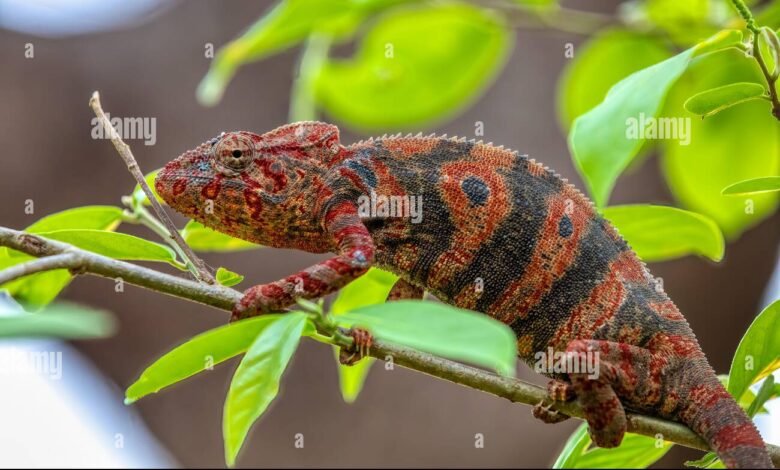
Perhaps the most famous adaptation is their ability to change color. Contrary to popular belief, chameleons do not change color solely for camouflage. Their color shifts are influenced by factors such as temperature, mood, communication, and light. Specialized cells called chromatophores, along with iridophores, allow them to reflect and absorb light in ways that create vibrant and dynamic color displays.
Another remarkable feature is their eyes. Chameleons have turret-like eyes that can move independently, allowing them to observe two different directions simultaneously. This gives them a nearly 360-degree field of vision without moving their bodies—an invaluable advantage when detecting predators or prey.
The Science Behind Color Changing
The color-changing ability of chameleónovité is a complex physiological process rather than a simple pigment shift. Beneath their skin lie multiple layers of specialized cells. The top layer contains chromatophores filled with pigments such as yellow and red. Beneath these are iridophores, which reflect light using nanocrystals, creating blues and whites.
When a chameleon experiences a change in environment or emotional state, its nervous system triggers adjustments in these cells. The nanocrystals in the iridophores shift their spacing, altering how light is reflected. This interaction between pigment cells and structural cells results in the wide spectrum of colors observed.
Color changes also play a significant role in communication. Male chameleons, for example, display brighter and more intense colors when competing for territory or attracting a mate. On the other hand, darker or muted tones may indicate stress, submission, or illness. This visual language is essential for their social interactions and survival.
Feeding Mechanisms and Hunting Techniques
Chameleons are primarily insectivores, although some larger species may consume small birds or reptiles. Their hunting strategy is based on patience and precision rather than speed. They often remain motionless for long periods, blending into their surroundings while observing potential prey with their independently moving eyes.
The most extraordinary tool in their hunting arsenal is their tongue. A chameleon’s tongue can extend up to twice the length of its body and is propelled at incredible speeds. The tip of the tongue is covered with a sticky mucus that helps capture prey instantly. This rapid projection is powered by elastic tissues that store and release energy like a spring.
Once the prey is captured, it is quickly retracted into the mouth and swallowed whole. This efficient feeding mechanism allows chameleónovité to conserve energy while maximizing their hunting success. Their slow, deliberate movements ensure they remain undetected until the perfect moment to strike.
Habitat and Geographic Distribution
Chameleónovité are predominantly found in Africa and Madagascar, with Madagascar being home to nearly half of all known species. These reptiles thrive in a variety of environments, ranging from lush rainforests to arid deserts. Each species has evolved to suit its specific habitat, resulting in a wide diversity of forms and behaviors.
In forest environments, chameleons are often arboreal, living in trees and shrubs. Their coloration typically matches the green hues of foliage, providing effective camouflage. In contrast, species found in desert or savanna regions may exhibit more muted tones such as browns and grays, helping them blend into dry landscapes.
Environmental factors such as temperature, humidity, and vegetation play a crucial role in determining the distribution of these reptiles. Chameleons are ectothermic, meaning they rely on external heat sources to regulate their body temperature. As a result, they are highly sensitive to climate conditions and are often restricted to specific ecological niches.
Reproduction and Life Cycle
The reproductive strategies of chameleónovité vary among species, but most are oviparous, meaning they lay eggs. Female chameleons typically dig a hole in the ground where they deposit their eggs before covering them with soil. The incubation period can range from several months to over a year, depending on the species and environmental conditions.
Some species, however, are ovoviviparous, giving birth to live young instead of laying eggs. This adaptation is particularly beneficial in colder climates where egg development outside the body may be less viable. The young are usually independent from birth and must fend for themselves without parental care.
Chameleons generally have relatively short lifespans, with many species living between two to ten years. Their survival depends heavily on environmental conditions, availability of food, and protection from predators. Despite these challenges, their unique adaptations allow them to thrive in diverse habitats.
Behavioral Traits and Social Interaction
Chameleónovité are typically solitary creatures, preferring to live alone except during mating seasons. They are highly territorial, especially males, who will display aggressive behaviors and vivid color changes to ward off rivals. These displays often prevent physical confrontations by establishing dominance visually.
Their movements are slow and deliberate, often resembling the swaying motion of leaves in the wind. This behavior enhances their camouflage, making it difficult for predators to detect them. Despite their slow pace, they are highly alert and capable of rapid action when necessary.
Communication among chameleons is primarily visual. Unlike many other reptiles, they rely heavily on body language and color changes to convey messages. This includes signals related to mating, aggression, and stress, forming a complex system of non-verbal communication.
Conservation Status and Threats
Many species within the chameleónovité family face significant threats due to habitat destruction, climate change, and illegal wildlife trade. Deforestation, particularly in Madagascar, has led to the loss of critical habitats, putting numerous species at risk of extinction.
The exotic pet trade also poses a major threat. Chameleons are often chameleónovité captured from the wild and sold globally, sometimes under poor conditions that reduce their chances of survival. While some species are bred in captivity, illegal collection remains a concern for conservationists.
Efforts are being made worldwide to protect these unique reptiles. Conservation programs focus on habitat preservation, legal regulation of trade, and public awareness. Protecting chameleons is not only important for maintaining biodiversity but also for preserving the ecological balance of their habitats.
Conclusion
Chameleónovité represent one of the most extraordinary examples of evolutionary adaptation in the animal kingdom. From their color-changing abilities to their precision hunting techniques, every aspect of their biology is finely tuned for survival. Their uniqueness has fascinated scientists and nature enthusiasts alike, making them a symbol of adaptability and resilience.