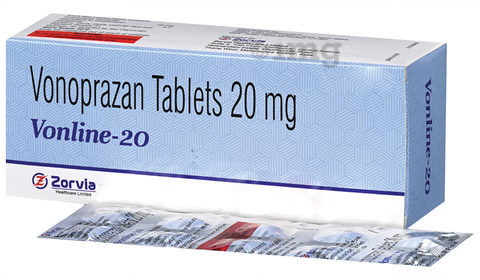
Introduction to Vonoprazan
Vonoprazan has quickly become one of the most talked-about medications in the field of gastroenterology. Designed to treat acid-related conditions more effectively than many traditional therapies, this medication represents a major advancement in how doctors manage stomach acid disorders. While proton pump inhibitors, commonly known as PPIs, have been the standard treatment for decades, vonoprazan offers a different mechanism that works faster and often more consistently.
The development of vonoprazan marked an important shift in gastrointestinal medicine. Many patients with conditions like acid reflux, stomach ulcers, or Helicobacter pylori infections have struggled with incomplete symptom relief while using older acid-suppressing drugs. was introduced to address these shortcomings by providing stronger and more stable acid suppression throughout the day and night.
What makes vonoprazan especially interesting is its classification as a potassium-competitive acid blocker, often shortened to P-CAB. Unlike traditional PPIs, which require activation in an acidic environment and may take several days to reach full effectiveness, starts working relatively quickly. This rapid action has drawn significant attention from healthcare professionals worldwide.
As the medication gains approval in more countries, patients and doctors are becoming increasingly interested in its advantages, uses, side effects, and long-term potential. Understanding how vonoprazan works and where it fits in modern medicine can help patients make more informed decisions about their digestive health.
How Vonoprazan Works in the Body
The stomach naturally produces hydrochloric acid to help digest food and eliminate harmful bacteria. While acid is essential for digestion, excessive acid production can damage the stomach lining and esophagus. Conditions such as gastroesophageal reflux disease, commonly called GERD, occur when stomach acid repeatedly flows back into the esophagus, causing irritation and discomfort.
Vonoprazan works by directly blocking the acid-producing proton pumps inside the stomach lining. More specifically, it competes with potassium ions in the gastric proton pump system. This action prevents the final step of acid secretion, resulting in significant acid reduction.
One of the most notable benefits of is its rapid onset. Traditional PPIs often require several doses before reaching maximum effectiveness because they need active proton pumps to function properly. Vonoprazan bypasses many of these limitations, allowing patients to experience symptom relief much faster.
Another important feature is the medication’s stability in acidic environments. PPIs can degrade under certain stomach conditions, but remains stable and effective. This allows it to maintain stronger acid suppression for a longer period, including during nighttime hours when many patients experience severe reflux symptoms.
The consistent acid control provided by vonoprazan may improve healing rates for erosive esophagitis and stomach ulcers. Researchers continue studying how this enhanced acid suppression may benefit additional gastrointestinal conditions in the future.
Medical Uses of Vonoprazan
Vonoprazan is primarily used for treating acid-related digestive disorders. One of its most common applications is managing gastroesophageal reflux disease. Patients with persistent heartburn, regurgitation, and chest discomfort may benefit from the medication’s powerful acid-suppressing properties.
Doctors also prescribe for erosive esophagitis, a condition in which stomach acid damages the lining of the esophagus. Faster acid suppression may promote quicker healing and reduce discomfort for patients dealing with chronic inflammation.
Another major use involves the treatment of Helicobacter pylori infections. Helicobacter pylori, often referred to as H. pylori, is a bacterium linked to stomach ulcers and even stomach cancer in some cases. Successful treatment requires a combination of antibiotics and acid suppression therapy. Studies have shown that vonoprazan-based therapy can achieve high eradication rates, especially in patients who previously failed standard treatments.
Peptic ulcer disease is another important area where may be helpful. Stomach and duodenal ulcers often develop because of excessive acid exposure or bacterial infection. Strong acid suppression allows the stomach lining to heal more effectively while reducing pain and complications.
In some countries, healthcare providers also use vonoprazan to prevent ulcers caused by nonsteroidal anti-inflammatory drugs, commonly called NSAIDs. People who take pain medications regularly may face an increased risk of gastrointestinal damage, and acid suppression therapy can help lower that risk.
As research continues, experts are exploring whether could be useful in additional digestive conditions that involve acid imbalance or chronic inflammation.
Vonoprazan vs Proton Pump Inhibitors
For years, proton pump inhibitors dominated the treatment of acid-related disorders. Medications such as omeprazole, lansoprazole, and esomeprazole became household names because they effectively reduced stomach acid in millions of patients. However, vonoprazan has introduced serious competition in this area.
One of the biggest differences between and PPIs is speed. PPIs generally require several days of continuous use before achieving full acid suppression. Vonoprazan, on the other hand, can begin working much sooner. Patients often notice faster symptom relief, especially when dealing with severe reflux or ulcer pain.
Another major distinction involves consistency. Some patients metabolize PPIs differently due to genetic variations in liver enzymes. This can result in unpredictable treatment outcomes. Vonoprazan appears less affected by these metabolic differences, leading to more reliable acid suppression across diverse patient populations.
Nighttime acid breakthrough is another challenge associated with PPIs. Many individuals continue experiencing acid production overnight despite daytime treatment. Vonoprazan’s longer-lasting suppression may help reduce these nighttime symptoms more effectively.
Despite these advantages, PPIs still remain widely used because they have a long track record of safety and effectiveness. In many mild cases, traditional PPIs continue to provide adequate symptom control at a lower cost. Healthcare providers often consider factors such as severity of disease, previous treatment response, and overall patient health when deciding between therapies.
Some experts believe vonoprazan may eventually become a preferred option for difficult-to-treat acid disorders, especially in patients who fail conventional therapies.
Benefits of Vonoprazan Treatment
The growing popularity of vonoprazan is largely due to the unique advantages it offers over older acid-suppressing medications. One of the most significant benefits is rapid symptom improvement. Patients struggling with severe heartburn or reflux often appreciate how quickly the medication starts working.
Another major advantage is its strong and sustained acid suppression. Maintaining a stable stomach pH level is crucial for healing damaged tissue in the esophagus and stomach. Vonoprazan’s ability to provide around-the-clock acid control may lead to higher healing rates in certain patients.
The medication also demonstrates promising results in H. pylori eradication therapy. Antibiotic resistance has become a growing problem worldwide, making some infections harder to treat. Strong acid suppression enhances antibiotic effectiveness, and vonoprazan-based regimens have shown impressive success rates in clinical studies.
Convenience is another positive factor. Some traditional acid medications require careful timing around meals to achieve optimal effectiveness. offers greater flexibility because its activity is less dependent on meal timing.
Patients who previously experienced incomplete relief with PPIs may also benefit from switching to vonoprazan. Persistent symptoms can significantly affect quality of life, leading to sleep disturbances, dietary restrictions, and emotional stress. Improved symptom control may help patients regain comfort and confidence in daily activities.
Healthcare providers are increasingly recognizing the value of personalized treatment approaches. Vonoprazan provides another important option for tailoring therapy to individual patient needs.
Potential Side Effects and Safety Concerns
Like all medications, vonoprazan may cause side effects in some individuals. Most reported side effects are mild to moderate, but patients should still remain informed about possible reactions before starting treatment.
Common side effects may include diarrhea, constipation, nausea, abdominal discomfort, and headache. Some patients also report bloating or changes in bowel habits. These symptoms are generally manageable and often improve as the body adjusts to the medication.
Long-term acid suppression can potentially influence nutrient absorption. Reduced stomach acid levels may affect the body’s ability to absorb certain vitamins and minerals, including vitamin B12, magnesium, and calcium. Healthcare providers may monitor patients who require extended therapy.
There are also concerns regarding infections associated with prolonged acid suppression. Lower stomach acidity may increase susceptibility to certain gastrointestinal infections because stomach acid normally acts as a protective barrier against harmful bacteria.
Some researchers continue studying the long-term safety profile of vonoprazan, especially since it is newer than traditional PPIs. While current evidence appears encouraging, ongoing monitoring remains important as more patients use the medication over extended periods.
Drug interactions are another consideration. Patients should always inform healthcare professionals about all medications and supplements they are taking. Certain combinations may affect how vonoprazan works or increase the risk of side effects.
Although severe reactions are uncommon, patients experiencing allergic symptoms, severe abdominal pain, persistent vomiting, or unusual bleeding should seek medical attention immediately.
Global Approval and Growing Popularity
Vonoprazan was first introduced in Japan, where it quickly gained popularity among gastroenterologists. Japanese researchers played a major role in developing and evaluating the medication, and early clinical results generated significant excitement within the medical community.
Over time, additional countries began reviewing and approving the drug for various gastrointestinal conditions. Interest expanded internationally as studies continued demonstrating strong acid suppression and promising clinical outcomes.
In the United States, the medication has gradually entered the market through specific approved treatment combinations for H. pylori infections and acid-related disorders. Regulatory approvals often depend on detailed clinical trial data proving both effectiveness and safety.
Pharmaceutical companies continue investing heavily in research involving vonoprazan. Scientists are studying its role in reflux disease, ulcer prevention, bacterial eradication therapy, and other gastrointestinal applications. As more evidence becomes available, usage guidelines may continue evolving.
The growing awareness of digestive health has also contributed to increased interest in advanced therapies like vonoprazan. Modern lifestyles, dietary habits, obesity, and stress levels have all contributed to rising rates of acid-related conditions worldwide.
Medical professionals increasingly recognize that not every patient responds the same way to treatment. Having additional therapeutic options allows doctors to create more individualized treatment plans for complex digestive disorders.
The Future of Vonoprazan in Gastroenterology
The future of vonoprazan appears highly promising. As researchers continue evaluating its effectiveness in broader patient populations, the medication may become a standard treatment for multiple acid-related diseases.
One important area of future research involves long-term maintenance therapy for chronic reflux disease. Many patients require ongoing acid suppression to prevent recurring symptoms and tissue damage. Scientists are working to determine the safest and most effective long-term treatment strategies involving vonoprazan.
Another exciting possibility involves combination therapies. Researchers continue studying how vonoprazan interacts with antibiotics and other medications to improve outcomes in difficult-to-treat infections and ulcer conditions.
There is also growing interest in precision medicine. Different patients respond differently to acid suppression therapies because of genetics, metabolism, and lifestyle factors. Vonoprazan may play an important role in more personalized gastrointestinal treatment approaches in the future.
Healthcare systems worldwide are increasingly focused on improving treatment efficiency and patient satisfaction. Faster symptom relief and stronger healing outcomes could potentially reduce complications, hospital visits, and long-term healthcare costs associated with chronic acid disorders.
While more long-term studies are still needed, current evidence suggests that vonoprazan could reshape how physicians approach acid-related gastrointestinal diseases for years to come.
Conclusion
Vonoprazan represents a major advancement in the treatment of acid-related digestive disorders. By offering rapid, powerful, and consistent acid suppression, the medication addresses several limitations associated with traditional proton pump inhibitors.